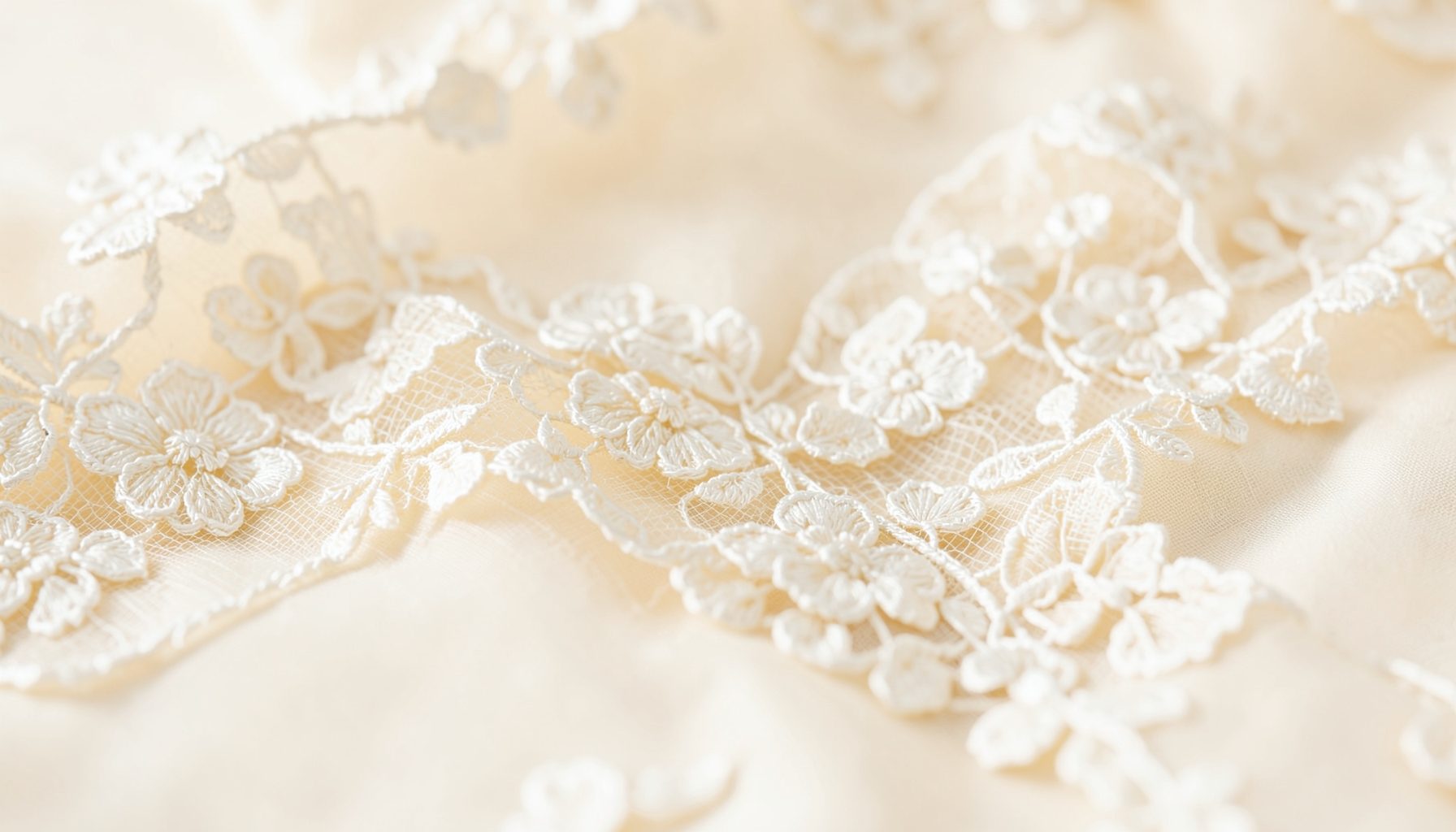
What Makes Organza Special
Organza is a plain-weave fabric known for being exceptionally lightweight while still holding its shape. At first glance it appears sheer and almost weightless, yet it has enough body to create volume in garments — a combination that makes it a favourite for dressmaking.
The fabric's crisp hand and subtle sheen give it an elegant look, but its real strength lies in how it drapes. Organza moves with a gentle, airy flow rather than clinging, which is why tailors reach for it when designing skirts and dresses that need structure without heaviness.
Common Uses in Dressmaking
Tailors and home sewists use organza for garments where fullness and shape matter. It appears frequently in:
- Skirts and dresses — especially styles that call for volume, such as A-line or ball-gown silhouettes.
- Overlays — a sheer organza layer over a solid base adds depth and a soft, romantic finish.
- Sleeves and accents — puffed or gathered organza sleeves bring a touch of drama without adding weight.
Because organza is sheer, it often gets paired with a lining fabric underneath. The contrast between the translucent top layer and the opaque base creates visual interest while keeping the garment wearable.
Working With Organza
Organza can be slippery under the needle, so a few precautions help. Use sharp, fine pins and a fresh machine needle to avoid snagging the delicate weave. French seams work well for finishing edges neatly, and a narrow rolled hem keeps the hemline light and clean. Pressing with low heat preserves the fabric's crispness without scorching.